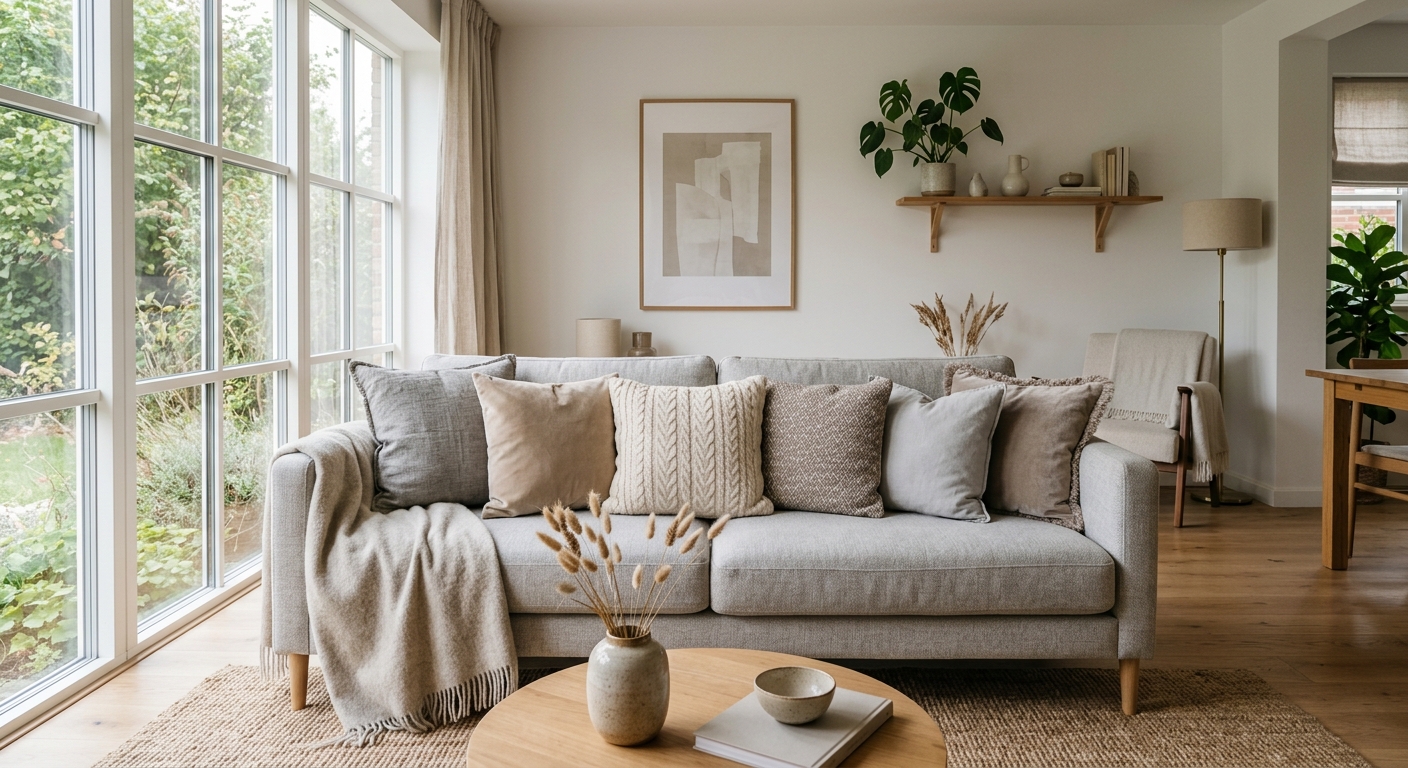
Grey is one of the most versatile and sophisticated colours you can bring into your home. However, many people make the mistake of thinking that a neutral-toned decoration equals a boring or characterless space. The key lies in the details, and cushions are undoubtedly the most powerful and affordable tool for bringing life, depth and personality to any room dominated by greys and beiges.
In this practical guide you will discover how to select, combine and arrange cushions so that your grey sofa transforms from a functional piece of furniture into the visual centrepiece of your living room. No renovations or major investments required.
Why Neutral Tones Need Texture and Layers
When you work with a limited colour palette, as happens in grey, off-white, beige or taupe decorations, the human brain automatically searches for variation to maintain visual interest. If all elements have the same finish and the same colour temperature, the result can feel cold or clinical.
This is where cushions come in. Their role in a neutral scheme is not just decorative: they are responsible for bringing the three dimensions that every space needs.
The Three Dimensions of a Well-Chosen Cushion
- Texture: Velvet, linen, chunky knit, textured cotton... each fabric captures light differently and creates visual contrast even when the colours are similar.
- Tone: Within the grey scale there are dozens of shades. A charcoal grey alongside a pearl grey, on a medium grey background, creates a rich and balanced composition.
- Pattern: Fine stripes, subtle geometric weaves, abstract prints in neutral tones... pattern adds movement without breaking the harmony.
The Odd Number Rule: How to Arrange Cushions on the Sofa
Interior designers almost universally use the odd number rule when arranging cushions on a sofa. A three-seater sofa works best with 3 or 5 cushions, while a two-seater can carry 2 or 3. The reason is purely visual: odd numbers generate controlled asymmetry, which our brain perceives as more natural and aesthetically pleasing.
A Concrete Formula for a Grey Three-Seater Sofa
If you start with a medium grey sofa, this combination works practically every time:
- 2 large cushions (60x60 cm) at the ends, in dark grey or anthracite with texture.
- 2 medium cushions (45x45 cm) in front of the previous ones, in beige, cream or taupe.
- 1 rectangular cushion (30x50 cm) in the centre, with some pattern element or a different texture such as knit or fringe.
This layered structure creates depth and makes the sofa look more luxurious and considered, even when the covers are affordable.
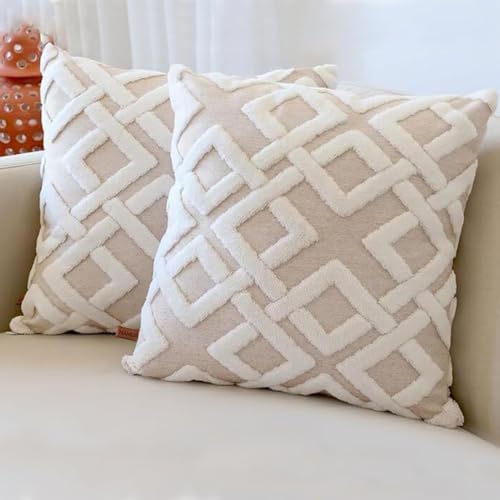
Conjunto De 2 Fundas
Which Fabrics Work Best in a Grey Decoration
Not all fabrics have the same impact in a neutral colour scheme. The choice of material can be the difference between a living room that looks like it came from a magazine and one that simply “looks fine”.
Recommended Fabrics and Their Effects
Velvet: It is the king of decorative cushions for one reason: it absorbs and reflects light in a unique way, creating a depth effect even in flat colours. A charcoal velvet cushion on a light grey sofa provides instant sophistication. In winter it also evokes warmth and comfort.
Natural linen: Perfect for spaces seeking a more organic, Scandinavian or Mediterranean feel. Linen in sand, beige or grey taupe tones adds a rough, honest texture that contrasts beautifully with smooth surfaces such as uniform fabric sofas or leather.
Textured cotton or knit: Chunky knit cushions are a sustained trend because they bring an artisanal and cosy element. They work especially well in autumn and winter, and in colours like cream, ivory or pearl grey they are a safe bet.
Silk or satin: For more formal or glamorous spaces, a touch of silver grey or champagne silk instantly elevates the visual level of the whole composition. Use it sparingly: one or two cushions of this type are enough.
Colour Combinations That Work on a Grey Background
One of the great advantages of grey is its absolute neutrality: it works with almost any colour. But if you want to maintain the coherence of a neutral and sophisticated palette, these are the most effective combinations.
Grey + Off-White + Taupe
This is the most classic combination and it always works. Off-white or cream softens the coldness of grey, while taupe (greyish brown) connects the two extremes. It is a timeless palette that never goes out of fashion.
Grey + Beige + Black
If you want to give a more contemporary and characterful look, add one or two black cushions to the scheme. Black acts as a visual anchor and prevents the composition from looking too soft or undefined. It is the favourite choice in industrial style and modern Nordic design.
Grey + Terracotta or Soft Ochre
If you are looking for warmth without abandoning the neutral base, a touch of muted terracotta or soft ochre can be the perfect complement. It is not a loud colour but a warm note that humanises the space. This combination is very present in current Mediterranean-inspired and minimalist boho chic decoration.
Grey + Sage Green
Sage green or dusty green has become one of the most popular tones in recent years precisely because it works as a neutral. On a grey background it brings freshness and naturalness without clashing. It is an especially effective combination in Japandi or Scandinavian style decorations.
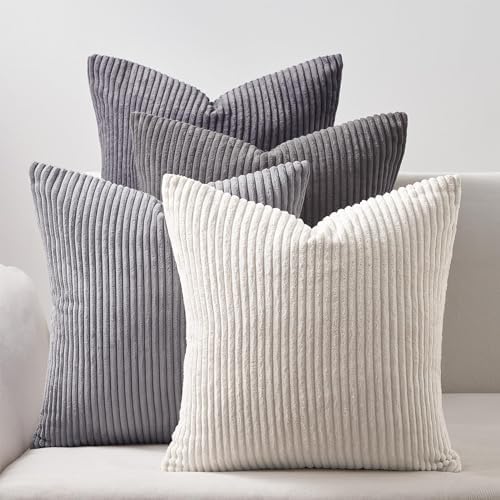
Topfinel Fundas de Cojines164
Sizes and Shapes: Beyond the Classic Square
Most people buy 45x45 cm square cushions and place them all the same. It is functional, but it misses a huge opportunity to create visual interest. Mixing shapes and sizes is one of the best-kept secrets of interior styling.
Size Guide by Sofa Type
2-seater sofa: Use mainly 45x45 cm cushions. You can add a rectangular one of 30x50 cm for the centre.
3-seater sofa: Combine 60x60 cm at the ends with 45x45 cm in front. A rectangular one in the centre completes the composition.
Corner sofa or chaise longue: Here you have more freedom. You can go from large 60x60 cm cushions to small decorative 30x30 cm ones. The key is to create groups, not a uniform row.
Common Mistakes You Should Avoid
Knowing what not to do is just as valuable as knowing best practices. These are the most frequent mistakes when decorating with cushions in grey and neutral schemes.
All the Same Tone and Texture
If you buy five cushions in the same medium grey in plain fabric, the result will be monotonous even if the individual colours are beautiful. Variation is essential.
Too Many Different Patterns
The opposite extreme is also a mistake. If each cushion has a different pattern with no relationship to the others, the result is chaotic. The general rule is no more than two different patterns in the same composition, always united by a common colour.
Neglecting the Filling
A beautiful cover on a poor-quality filling ruins the entire effect. Invest in feather or high-density fibre fillings. Cushions should look plump and shaped, not sunken and flat.
How to Refresh Your Decoration by Season Without Spending Much
One of the great advantages of working with a neutral grey base is that you can change cushions according to the time of year without having to rethink the entire decoration.
In spring and summer: opt for lightweight fabrics like linen, colours like white, soft mint green or pale terracotta.
In autumn and winter: switch to warmer fabrics like velvet and knit. Incorporate tones like muted mustard, dark burgundy or bottle green, always in desaturated versions to maintain neutral harmony.
With a base of grey and beige covers that you keep year-round, you only need to change two or three pieces per season to completely transform the feel of the space.
Conclusion: The Power of Details in Neutral Decoration
A grey and neutral tone decoration is not boring: it is the perfect canvas for playing with textures, layers and shades. Cushions are the most versatile, affordable and visually impactful tool you have at your disposal to achieve this.
Remember the key principles: variety of textures, combination of sizes, mixing of tones within the same range and no more than two patterns in the same composition. With these simple rules and the right products, your living room can reach a level of sophistication that rivals any professional interior design project.